Rotterdam: From destruction to dynamism
- Cameron Woodhead
- Nov 13, 2025
- 18 min read
As I turned 30, Tommy and I decided to celebrate by exploring the edgy cousin of Amsterdam and seeing how this bustling port city had reinvented itself for the 21st-century.
Normally my birthdays are very tame affairs and I am reluctant to make a big deal out of them. However, seeing as this was a special one, I wanted to mark the occasion by visiting somewhere that has been on our radar for a while.
We slightly limited ourselves by saying it had to be a destination served by the Eurostar, but the experience of getting a smooth, high-speed train rather than being stuck in stuffy airports was much more preferable.

After considering Paris, Lille and Brussels, ultimately it was the penultimate stop of the journey in Rotterdam that drew me in the most. Especially considering the vast coffee options on offer in the Netherlands' second city, as well as its penchant for mid-century aesthetics and funky modern architecture.
Coffee and Food
Dune Van Vollenhovenstraat 14A, 3016 BH
Coppi Koffie Bergweg 316, 3032 BB
The Cakery Karel Doormanstraat 376, 3012 GA
Theemas Karel Doormanstraat 469, 3012 GH
NOTK Delistraat 20, 3072 ZK
Diego's Posthumalaan 13, 3072 AG
Sound Kitchen Samuel Soesmanstraat 52, 3015 GL
Ripsnorter Mariniersweg 65, 3011 NG
Crave Vogelenzang 6, 3011 LM
Markthal Verlengde Nieuwstraat, 3011 GX
Schot Coffee Pelgrimsstraat 5C, 3029 PA
Giraffe Hoogstraat 46A, 3011 PS
Station Bergweg Bergweg 335, 3037 EP
Attractions
Huis Sonneveld Jongkindstraat 12, 3015 CG
Westersingel Sculpture Route Westersingel, 3014 GP
Erasmusbrug Erasmusbrug, 3011 BN
Kinderdijk Nederwaard 1, 2961 AS Kinderdijk
Cube Houses Overblaak 70, 3011 MH
Chess Museum Overblaak 94, 3011 MP
Zwaanshalskwartier Zwaanshals 600, 3035 KT
Dakpark Vierhavensstraat 79, 3029 BB
Het Park Baden Powelllaan 2, 3016 GJ
Het Depot Museumpark 24, 3015 CX
Delfshaven Voorhaven 16, 3024 RM
Day one.
It was an early start in London, after staying over at the house of one of Tommy's friends, but once inside St. Pancras, the excitement began to take over as we were due to add another destination to our list of European cities.

Following a serene check-in experience, we were soon on the train and it was a smooth and pleasant journey that passed by quickly in the comfortable surroundings of the carriage. I cannot stress how much nicer an experience it is than flying and I truly believe high-speed rail has to be the way forward for short to mid-range journeys.
Arriving in the iconic station, we were straight off the train and into the city with zero fuss and our AirBnB host even allowed us to drop our luggage off during the day which was a big relief, giving us greater freedom to explore.
Given that we'd not eaten for a while, it was probably wise to refuel so we headed north to Coppi Koffie. On the way there was a mixture of traditional Dutch townhouses and modern apartment blocks that created a patchwork pattern down the streets, with each major boulevard having a large park dividing the houses. There was something new and interesting on every corner and it was building up an eclectic image of Rotterdam already.
Inside the café was an array of mid-century tables and chairs, an event space to the rear and a white tiled bar covered with baked goods to draw one in. We elected to sit in the window on some cute wooden stools, sheltered by a huge leaf. Very quickly, a couple of batch filters and sea salt chocolate cookies were brought over with a beaming smile and at this point, I truly felt that we had arrived in the city. That first coffee is very important in how the rest of the trip goes every time.

Fortunately, the coffee was vibrant and fruity, with a full juicy body and the cookie was buttery and sweet, but the large flecks of salt kept it from feeling to dense and rich. It was just what we needed to recharge and carry on with our plan. Given that time was relatively tight, I had made a vague schedule of things we wanted to see and places we wanted to go, which proved to be a wise decision in hindsight but still allowed us some flexibility and plenty time to relax.
On the way to Huis Sonneveld, there was the opportunity to take in the outdoor Westersingel Sculpture route. This collection of sculptures from artists including Pablo Picasso and Paul McCarthy sits alongside a canal lined with a mix of old Dutch houses and angular modern high-rises; the whole scene was one big metaphor for Rotterdam itself.

The sculptures were slightly quirky and avant-garde, providing a striking contrast to the serene canal and greenery. Most famous, perhaps, amongst these sculptures was the Father Christmas holding what can only be described as a wobbly lollipop, which has become a symbol for the area clearly, as it was hung above the side streets like bunting.


At the end of the sculpture route, sat the rectangular Huis Sonneveld, once home to the Sonneveld family, it is now preserved in all its 1930s glory as a shrine to Dutch Nieuwe Bouwen. Every item within the house is laid out exactly as the family would have had them nearly 100 years ago, with some spectacular examples of early modernist design. The attention to detail was exceptional and it made for a very fascinating experience.
Whilst there were elements that would certainly be out of place or questionable in today's living, there were also plenty that inspired us in our future interior design, including some curved orange recliner chairs and a hexagonal yellow dining set. It was slightly strange to see some of the things that were considered luxury back then that we
would now take for granted and seem everyday.
Dinner then beckoned and we made the short trip further down the main road to Dune, a speciality coffee shop near the iconic Erasmusbrug. After been seated, we were presented with an extensive coffee list for both filter and espresso-based drinks on some fluorescent acrylic. Even though this increased our excitement, it also increased some anxiety due to the sheer number of choices, with one even marked proceed with caution. Fortunately, the food menu was smaller but by no means lower in quality.
Our coffees were washed and natural process versions of an Ethiopian coffee roasted by Shokunin, also based in the city. The roaster themselves even identify this as their favourite among speciality coffee drinkers, unbeknownst to us at the time, but we could definitely see why. The washed was silky like caramel and had a juicy sweetness underlined by a floral 'earl grey' profile, whereas the natural had a more boozy undertone and brighter tropical fruit notes. Comparing two different versions of the same coffee was a fascinating experience and not one we often get to do, leaving us wanting to do this more often when the opportunity arises.

The meal was equally spectacular, Tommy going for some enormous almond pancakes with maple mascarpone, egg and crispy bacon, plus a gigantic pastrami and mushroom sandwich on focaccia that was smothered in parmesan, balsamic glaze and rocket. There were zero regrets about our indulgence as it was much needed, as well as being a superb birthday dinner that will live long in the memory.
Afterwards, we had planned to head to the AirBnB to drop our bags off and freshen up, but as we had already done so earlier and it was slightly later in the day than we had anticipated, we made the short walk to Witte de Withstraat for a slower pace to the afternoon.
The street was lined with old-style Dutch buildings, feeling more like Amsterdam, each one containing an independent and locally run café, shop or restaurant. Lunch had not been that long digested, so unfortunately we were unable to sample any of the eateries, however, we did peruse a few homewares and gift stores that sold a variety of cute ornaments and decorations.

It was a good way to relax a little and simply absorb the atmosphere of a new area of the city. There was that unmistakeable European feel, with people spilling out onto the streets enjoying some social time and the amount of small businesses which are the lifeblood of cities and towns across the continent.
Not far from Witte de Withstraat was The Cakery, a patisserie that specialised in enormous cakes that adorned the window display. Initially, there was some slight suspicion it was a little 'style over substance', but once inside we noticed some smaller more 'French-looking' baked goods that stood out. We picked one each to enjoy later with a cup of tea that would round off a wonderful day, mine being a caramel apple tart that felt luxurious and delicate all at once.
Across the street, we spotted a tea shop and decided to have a browse of what they had to offer. Inside Theemas was a cacophony of smells, fresh tea leaves and coffee beans covering every wall of the store. After plucking up some courage to ask for help, we described a certain profile of Assam tea that we normally buy and straightaway the staff member knew exactly what to offer us. One sniff confirmed it and a bag of some deep, malty Assam was ours.
Contented with our baked goods and tea, we made our way to the famous Erasmusbrug with its striking triangular structure providing safe passage over the Maas. On the opposite bank stood the gleaming glass skyscrapers that Rotterdam has become famous for, strident against the cool September sunset.

Tucked away behind the towers were, lay a small wine bar by the name of NOTK, in reference to the Italian term enoteca. After been seated and handed a menu, immediately we were drawn to our favourite type - orange wine - along with some traditional bitterballen and croquettes to serve as an appetiser to our upcoming evening meal.

As the bar filled up, we decided it was time to head off, back past the now illuminated skyscrapers and to Diego's, for some towering burgers and a cocktail to finalise the celebrations.
Initially, we were told there would be a wait for a table but were soon sat within minutes. Both of us rejected the idea of some fries, after our indulgence at NOTK, which turned out to be wise once we saw the size of the burgers.
With a succulent beef patty, sweet grilled onion, roasted tomato and a special mushroom sauce, it was definitely a whole meal in itself, all washed down with a perfectly balanced Manhattan - which seemed appropriate given that Rotterdam is known as 'Manhattan on the Maas'.

This was even more apparent as we left the restaurant to be greeted with incandescent towers on all sides, providing a spectacular backdrop to the evening sky.

It had certainly been a birthday that will live long in the memory and one a fitting way to mark a new decade, but the trip itself was only just getting started and we still had 48 hours to further explore this amazing city.
Day two.
The following day began with a slightly strict schedule, as we aimed to catch the 09:55 boat out to the UNESCO World Heritage Site of the Kinderdijk windmills. Beforehand, breakfast was had at Sound Kitchen, consisting of a fruity and nutty batch brew by one of our favourite roasters, Manhattan, alongside a freshly baked pain au raisin.

Out of the window, the sun was rising above the Euromast and as we were the only ones in the café at the time, it made for a serene start to the day as we contemplated the remainder of our trip. As well as the seated area, Sound also included a listening room, filled with various headphones and Hi-Fi equipment that were available for use whilst drinking your coffee, something I'm sure we would have explored more had we had the time.
We hot-footed it to the ferry, soon cruising down the river and viewing the city in a different light. Some tablets were required to prevent any nausea, but once we left the city itself, the hustle and bustle quickly fell by the wayside and there was a peace and tranquility in the air. The journey was quicker than advertised and soon we arrived at the jetty ready to venture into the iconic fields.

Despite having options to enter some windmills, museums and pumping stations, we opted against that and simply enjoyed walking down the pathways and taking in the surroundings. Everything was beautifully undisturbed and frozen in time, the vast green fields stretching for miles around, punctuated by the calming brooks and only the windmills themselves sticking their head above the hedges. It was quintessentially Dutch, a delight to behold and simply walk around, providing a rejuvenating start to our second day.

We circled round and walked back up to the ferry, but before boarding we made our way into the village of Kinderdijk itself, looking for Bakkerij Ons dagelijks Brood, which sadly is the last remaining shop in the village, having once contained around thirty.
As with the rest of the village, it was adorably traditional, displaying freshly baked loaves and pastries, local cheeses and small packages of sweet goods. It took us a small while, picking out some focaccia pizzas, chocolate windmills and a healthy wedge of Gouda that would form tomorrow's lunch (more on that saga later), Tommy also picked up a couple of bags of sweets that would be part of a present for upcoming family birthdays.
We ate our pizzas and chocolates on the ferry back as the skyline of Rotterdam came back into view, highlighting the stark contrast between the new and the old Netherlands, both charming in their own ways. One particular symbol of the new are the Cube Houses in central Rotterdam, just a stone's throw from the Art Nouveau Witte Huis, widely considered Europe's first high-rise building.

These angular, tilting houses form a complex designed by Piet Blom that features forty cubes perched on concrete columns, with the interior space underneath the homes used for retail and amenities. It could be described as one of the first modern 'urban villages', something that is becoming increasingly common in major cities, yet this felt like a shopping mall from a bygone age, despite the futuristic housing above.


One of the houses was open for viewing, so we ascended the narrow winding stairs up to the first level, which was the open-plan living room/kitchen/dining room space. The layout was slightly cramped (potentially owing to the amount of visitors inside) and you had to be careful not to bump your head. There was benched seating in one corner, with the opposite side holding a table that functioned more like a breakfast bar, backing onto the galley-style kitchen. Climbing more claustrophobic stairs to the second floor, this was where the bedroom and bathroom were, wrapped around the central column in one sweeping circle, the bed built into a corner just as the sofa downstairs. The final level, up a steep ladder, was a kind of snug/sitting room, which was by far the brightest of the rooms given it was at the highest apex of the cube. It would definitely make a wonderful place to sit and stargaze on a clear winter's evening, maybe under a blanket with a hot chocolate.
On the whole, the house was fascinating and we were very glad to have seen it, but unlikely we would be able to live in one of them. They were slightly too pokey and didn't seem to offer enough air and spaciousness inside, although it is easy to see the appeal of such an ingenious piece of architecture and the complex is certainly striking to look at as a whole.

In one of the units within the complex, sat the Museum of Chess Pieces, exhibiting all manner of chess sets from ornate, intricate sculptures, to modernist, simple blocks. Apparently, it is unofficially the largest collection of chess sets in the world, but owing to some bureaucracy at Guinness World Records, it hasn't been ratified to date. The owner also sadly informed us that the museum would soon be closing permanently and all the sets had been sold off, meaning we were extremely lucky to have been able to see all these sets in one place, something that will likely never happen again.
So far it had been a rather sedate day, taking in the sights and the tranquility of the windmills and museums, but it was about to step up a notch with a visit to Ripsnorter Coffee Roasters. Just before that, we nipped into next door, Crave, to pick up some pastries for our evening back at the AirBnB. Despite being plant-based, the pastries were no less light and airy and crispy than their butter-filled counterparts.
Back at Ripsnorter, there was not a single food item in sight as they fully dedicated themselves to world-class coffees. Our first choice was a chiroso varietal, which had undergone a highly controlled and specific fermentation process, resulting in a creamy cup reminiscent of an oolong tea alongside the sweetness and perfume of blueberries. It was delicate and refined, treat with an enormous amount of love and care to make the perfect cup.

Next up was a washed geisha coffee, much more an 'everyday' coffee, but definitely not in a negative sense. It was beautifully balanced and clean on the palate, with gentle notes of yellow peach and a lemony acidity. So enamoured were we with the whole coffee shop, we picked up a bag of our own to bring back to the UK, determined to enhance our coffee ritual with some exceptional roasts.

Now that we were well and truly invigorated, a spot of browsing some shops felt like the right thing to do. The Zwaanshalskwartier is a former industrial area of the city that has been transformed into an artistic hub, full of independent stores and creative centres. Naturally, we were drawn to a chocolatier, where we picked up some goods that miraculously made it back home with us, before simply strolling around the neighbourhood and exploring the range of shops on offer.
This was a more sedate side to the city, very much with a small town feel just a short hop from the bright lights of the skyscrapers, you could tell this was the traditional side to Rotterdam, reflecting the feel of other European cities that had managed to retain more of their historic streets following the Second World War.

En route back to the centre, we popped into the local Hay Store, just in case we hadn't had enough fill of Danish design from the summer (you can read more about all that here). It was predictably divine, containing all the things we loved, but following our splurge in Copenhagen, we held firm.
Our evening meal was to be in the famous Markthal, with its rich tapestry adorning the ceiling of the grand arch. It was a slightly overwhelming choice, especially considering neither of us were entirely sure what we fancied. Eventually, we sat down at Umi Sushi, with two delicious fresh sushi rice bowls, crispy gyoza and fluffy takoyaki. Every time we eat Japanese food, it leaves me feeling refreshed and satisfied, the ingredients all marrying together in a bowl of happiness - no wonder Japanese people are renowned for their health and longevity.
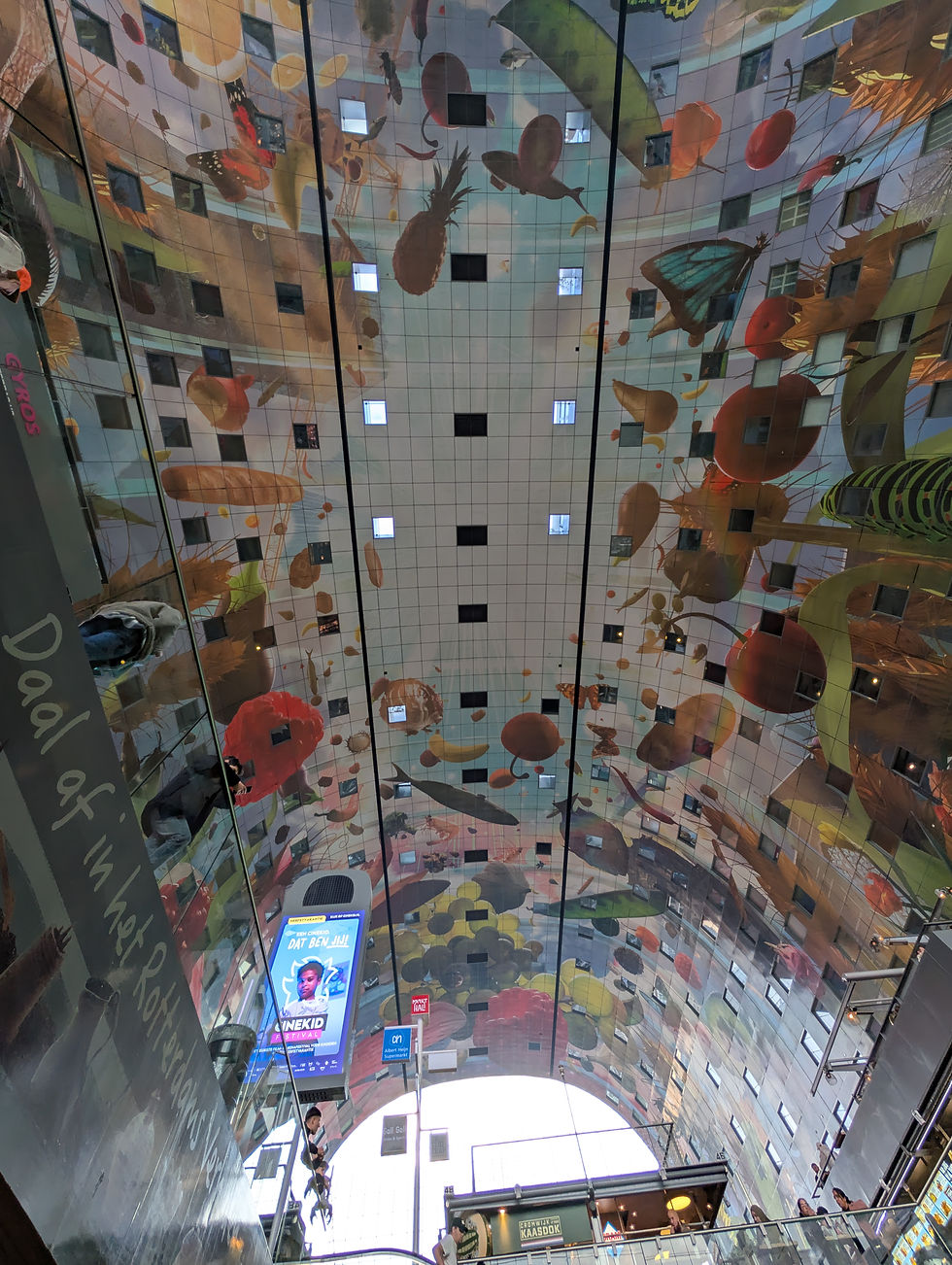
With that, we fast approached the end of the evening, but not before having a cup of earl grey with our previously purchased pastries, easing us into our slumber ahead of a final day of culture and coffee.
Day three.
One of the few areas of Rotterdam that survived the blitz was the historic Delfshaven, still boasting the traditional Dutch canal houses one would associate with Amsterdam or Utrecht. It was a gloriously sunny day, so we initially scouted out Schot Coffee Roasters, hidden in a warehouse near the newly created Dakpark.

Of course, we picked up some wonderfully fresh and fruity batch brew, to go with some oat, fruit and nut cookies. We slowly ambled through the park in the Sunday sunshine, soaking up the tranquil atmosphere. The park was perched on a rooftop but you couldn't tell you were walking over a building, it felt like a seamless marriage of urbanisation and greenery.

Historic Delfshaven was soon upon us, its Dutch charm immediately apparent. The old harbour buildings held stories one could only imagine and it was like entering a different world after the modernity of the main streets. Again, we just let the peace and quiet envelop us, simply taking in our picturesque surroundings, it really was like something out of a 17th century Dutch masters' painting.

Now, I mentioned that on day two we bought some cheese from the bakery in Kinderdijk, but following an email from Eurostar about our booking, it turned out that dairy products from the EU are not currently allowed to be brought into the UK. Due to this, we had visited a supermarket the previous evening and picked up some butter and seeded rolls to make some sandwiches for today's lunch.
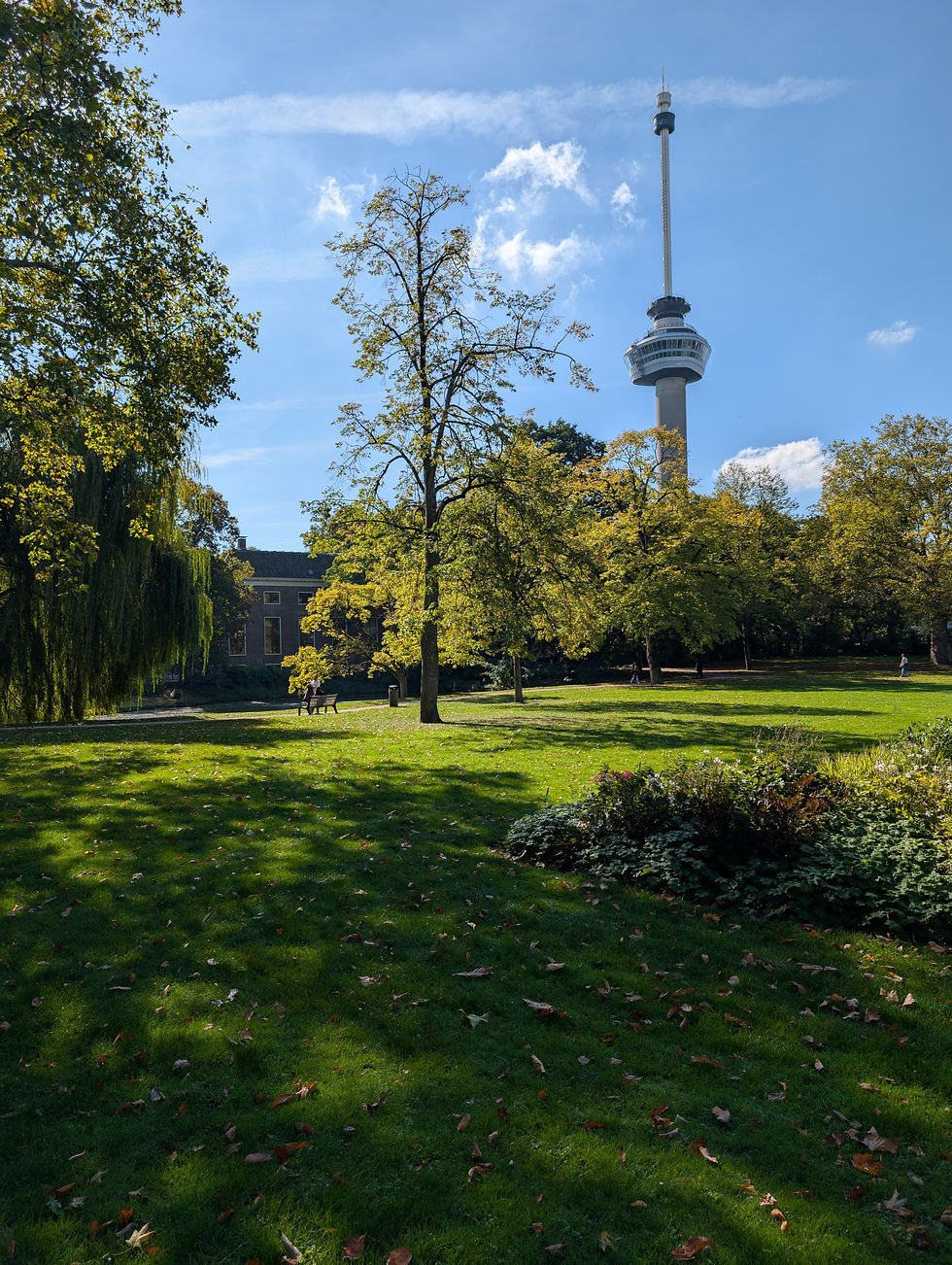
We jumped on a tram and sped towards Het Park and the famous Euromast, which stands tall over the park, casting a beady eye over the foliage and people within. Once there, we had another leisurely stroll whilst enjoying our superb Dutch cheese sandwiches, very humble ingredients but both of such high quality that it felt like luxury. As we walked through the park, we even saw some other families with similar lunches and at that moment in time, we felt supremely Dutch and could happily have stayed there for eternity.
Across the road, was the Museumpark which contained the vast majority of the city's museums and galleries. It took some deliberation as to which one we should visit, as they all offered something slightly different. Eventually, we plumped for the big shining dome of Het Depot van Museum Boijmans Van Beuningen - something which was thoroughly enjoyable to say.
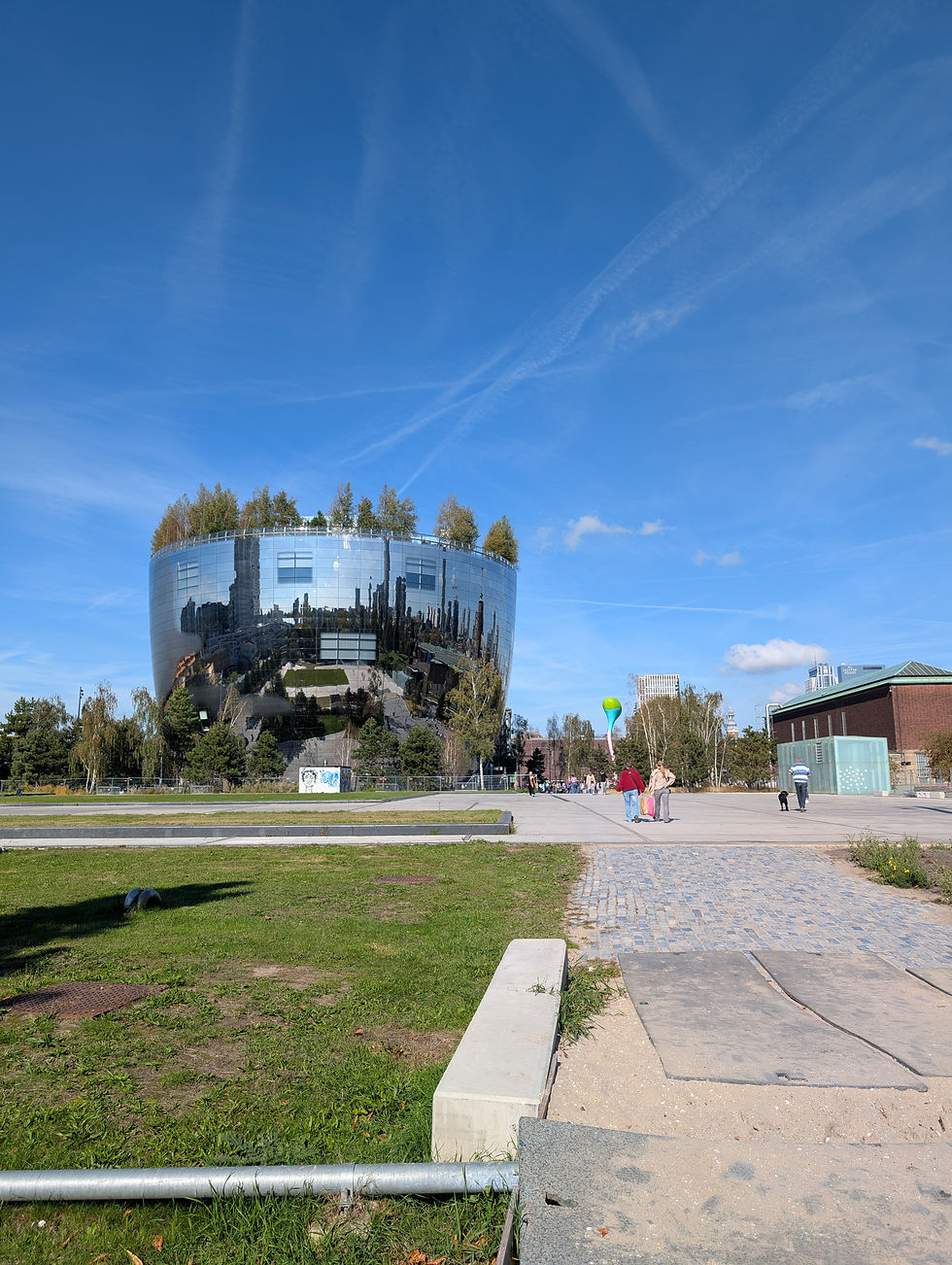
The museum itself is currently closed for several years for renovations, so the entire collection is in the depot, meaning that it was an extra special time to visit. Inside was a gaping atrium that extended all the way to the top of the building with exhibits and artworks dotted all over the vertical and horizontal space.

Seeing how artworks are stored and cared for was very eye-opening and the scale of the operation was immense. One particular exhibition that stood out was a temporary one relating to the natural decaying of glass and how the colour, shape, appearance and even smell changes depending on the composition of the material itself. It may sound slightly dry, but the differences were genuinely fascinating and varied.
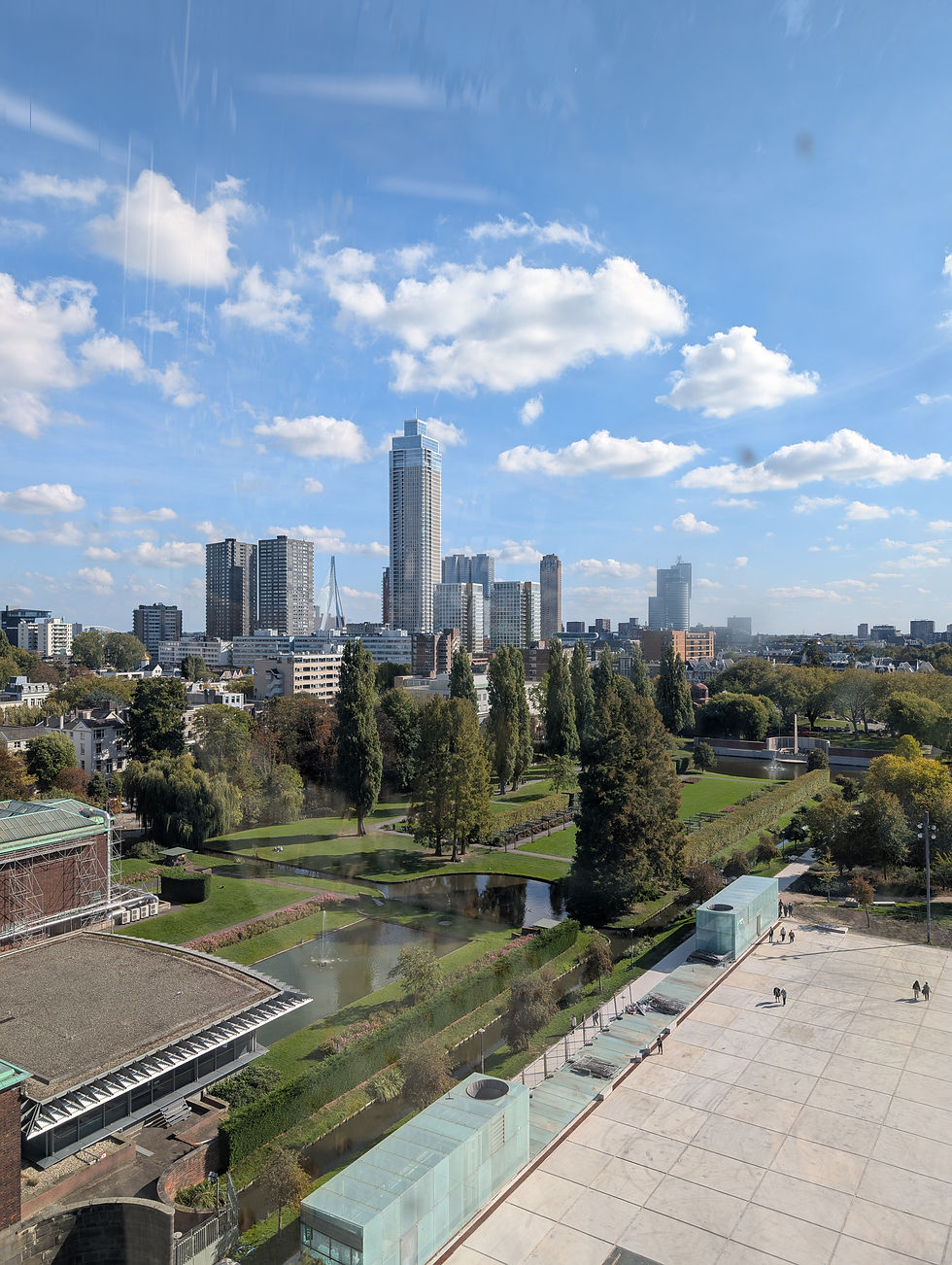
We worked our way up the floors, arriving at the rooftop garden that provided panoramic views across the entire city. Rotterdam was sprawling out in-front of us, the skyscrapers stretching up into the azure sky, the Maas twisting and turning its way through the buildings and greenery breaking up the relentless streets. It was a truly breathtaking view.
Once we had made our way back down, we took the metro (another excellent example of public transport in the city) to Oostplein for a coffee at Nice. Unfortunately it was rather busy and there was nowhere to sit in the small space they had, so we ventured a little further down the road to Giraffe Coffee Bar & Academy.
The scale of the menu was as impressive as Dune had been on the first day, every one of their house roasted coffees available in every possible brewing method. We were told to peruse the shelves and select one of the coffees, a washed Colombian coffee that produced notes of almond and cacao nibs with a light mandarin acidity. It was perfectly clean and delicate to sip, complementing the indulgent rocky road I'd picked out that had every nut, fruit and chocolate imaginable.

Birmingham does have some excellent coffee spots, but compared to Rotterdam and other cities across Europe we have visited, it pales into insignificance. One thing I am always struck by is how you can turn a corner and find an excellent, world-class coffee shop or roaster on every street. They provide important meeting points for locals and a community focal point that make them the ideal spot for finding out what life is like for those living in that area.
Our final meal led us back to where the trip had started. Just across the road to Coppi Coffee was Station Bergweg, a disused railway station that had been transformed into a food hall, but still with some original interior features present including platform boards and ticket office signage. Offerings such as tacos, pizza and cheesecake were on display, but we went for the comforting bowls of Nikkou Ramen.
We were presented with two deep, smiling bowls of noodles and broth, oozing flavour in every mouthful and embracing us with its herbaceous liquid and nourishing veggies. It was all washed down with an old favourite, Fritz Kola, before we retired to the AirBnB relatively early given that our train the following morning was pre-sunrise.

The new decade begins.
I had some misgivings about turning 30, as I think anybody does when they reach a new decade, but Rotterdam opened my eyes once again to that European way of life. It was slightly different to the cities we had experienced before, but bustling and fascinating all the same, with that familiar relaxed vibe that Europe has to offer. Maybe this decade will finally be the one where we make the jump across the channel permanently.
For all that the bombing of Rotterdam in 1940 was tragic, the city has grown once again into a vibrant metropolis, full of life, culture and dynamism. The 'Manhattan on the Maas' provided a wonderful entry into this new decade, where hopefully I can enjoy as spectacular a renewal as Rotterdam has.


Comments